
An Indian wedding isn't one event, it's a weekend that builds. Each day has its own mood, its own design, and its own job to do. Here's how a classic three-day celebration in Thailand unfolds, and what makes each part sing.
The day before: arrivals and a welcome
Guests fly in from three or four countries, so the weekend usually opens softly, a welcome dinner or informal get-together as people land. It does more than feed everyone. It lets family who've never met find each other before the big functions, so by the time the mehndi starts, the room already feels warm.
Day one: mehndi
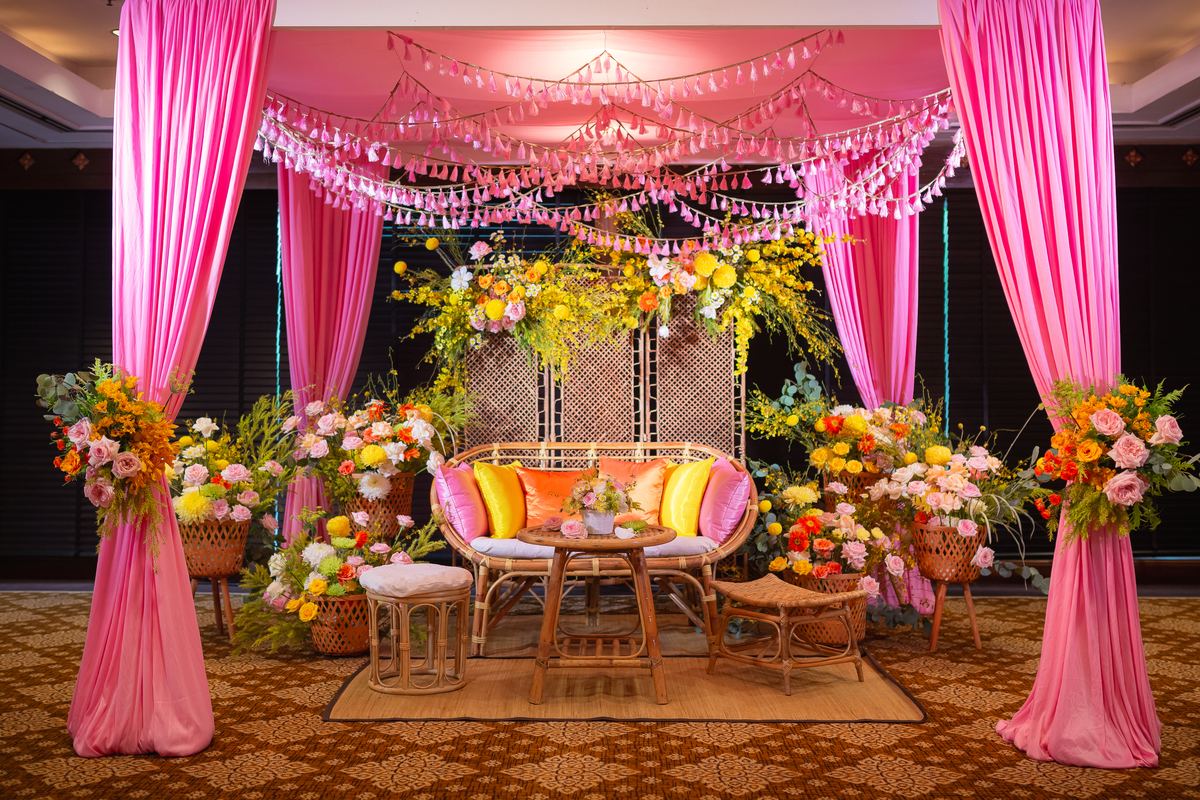
The mehndi is the gentlest, most personal day. Henna, colour, music that stays easy, and a setting built for lingering rather than a schedule. This is where a design can be playful: bright florals, low seating, hanging installations, a palette that feels like a garden. It sets the tone for everything that follows.
Day two: sangeet
Then the energy lifts. The sangeet is the party, performances, dancing, a proper stage, and lighting that turns a resort lawn into a nightclub after dark. It's usually the biggest production of the weekend after the wedding itself, and it's where guests let go. The design job here is drama: a strong stage, immersive light, a room that feels like an event.

Day three: ceremony and reception
The main day carries the most tradition and the most weight. A morning or midday ceremony under the mandap, often the emotional centre of the whole weekend, then a break, then the reception in the evening: the polished, formal celebration where the couple is toasted and the party closes out the weekend.
Getting two very different moods, sacred ceremony and grand reception, right on a single day is where planning earns its keep. The turnaround between them is tight, and it only looks effortless because a team is working hard in the background.
"Every single event was so beautiful I couldn't believe it. The mandap, the sangeet, the reception, everyone was obsessed with how everything turned out."
What ties it together
Three days can feel like three separate parties, or like one story told in chapters. The difference is design. When a single team holds the thread, colours, motifs, and details, from the first mehndi to the last dance, the weekend gains a rhythm guests can feel even if they can't name it.
Most couples build their weekend as mehndi, sangeet, then ceremony and reception, and add a haldi or welcome dinner if they want a fourth day. Your guest count and the functions you choose drive both the timeline and the budget, which we break down in the guides below.
Picturing your own three days in Thailand? Start with the planning guide and what it costs, then tell us what you're dreaming up.